
Trades, the deadline & pick protection
Reading the verdict, making a legal deal, and following a protected first
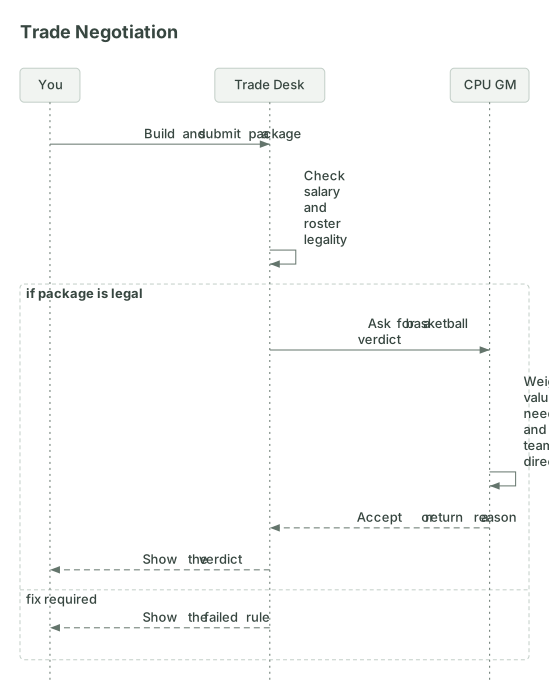
A trade has to pass two tests. First, the package must be legal under the cap and roster rules. Then the other front office has to want it. The Trades page keeps those questions separate so you can tell whether you have a bookkeeping problem or a basketball problem.
Reading the verdict
Build the package in the Deal tray and it checks both sides live. An over-the-cap team can take back no more than 125% of the salary it sends out, plus $100,000. A team below the cap can use its room; if the incoming money would push it past the cap, the normal matching rule becomes the fallback. Dead-cap contracts cannot be traded. Injured players can, and their recovery clock travels with them.
Roster legality matters too. A deal cannot leave a team below the eight-player absolute trade floor. Your normal playable roster is still 13 to 15, so a legal trade can leave cleanup work before you sim again. In-season free agency stays open for that repair.
Once the package is legal, the CPU GM looks at more than a headline grade. It weighs what it receives, whether the players fill actual positional needs, whether an asset is redundant, and whether the team is contending, rebuilding, or somewhere between. The verdict tells you the shape of a rejection (value, fit, direction) without exposing a raw trade-score spreadsheet. Player ratings in that conversation stay letter grades.
The deadline
Regular-season trading runs from opening night through day 95. That is five days before the day-100 start of the All-Star break. The market reopens at lottery night and stays open through the draft, re-sign period, free agency, and training camp.
Deadline week is louder than an ordinary week. CPU teams search more often, rebuilders are more willing to shop older or expiring players, and contenders look for needs they can fix now. That can soften a seller’s stance, but it does not switch off salary matching or make a bad fit disappear.
Which picks can move
The league keeps a rolling window of picks for the current draft and the next two. A pick’s slot always follows the original owner’s record, not the holder’s record. If you own somebody else’s first and that team collapses, the asset moves toward the top of the board with them.
Only an original owner trading its own pick can add protection. The available bands are Top-3, Top-5, Top-10, and Lottery (Top-14). If a protected pick is traded again, the protection travels with it unchanged; the new holder cannot widen, narrow, or remove it.
What happens on lottery night
There are three possible outcomes:
- Convey. The pick lands outside the protected band, so the holder receives it.
- Revert and roll. The pick lands inside the protected band, so the original owner keeps it. The obligation moves to the next year’s pick with the same protection, once.
- Extinguish. If the rolled pick triggers the protection again, or that next pick is already gone, the obligation ends and the holder receives nothing.
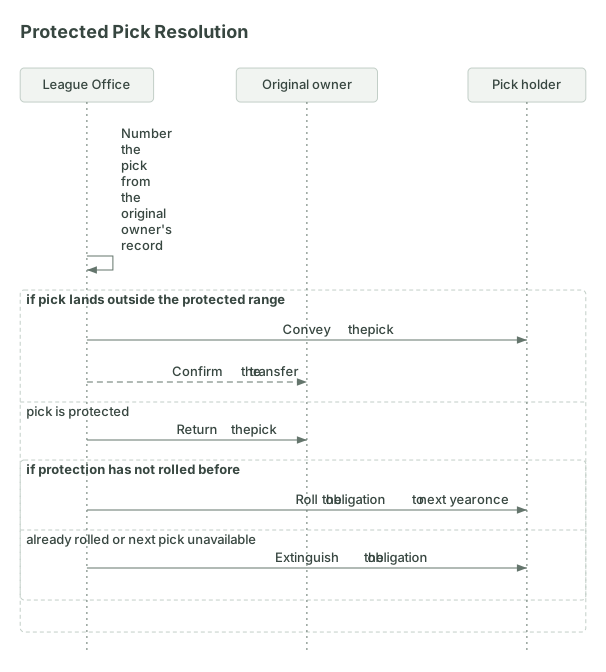
Protection is not a promise that the other team eventually gets a first. It is a one-roll obligation with a real path to disappearing. Price it that way before you press submit.